If you only automate one thing this year, this is it. Lead follow-up automation delivers the fastest, most measurable return of any AI investment a service business can make.
Most small business owners who start thinking about AI automation make the same mistake. They go looking for the most impressive thing they can do. They picture dashboards, predictive analytics, and complex workflows. They read about what enterprise companies are doing and try to find a version of that.
Then they get overwhelmed and do nothing.
The irony is that the most valuable automation available to a small service business is not complicated. It is not expensive. It does not require a technical team or a long implementation. And it starts paying for itself within the first week of being turned on.
It is lead follow-up automation. And if you are running a service business without it, you are leaving money on the table every single day.
Why Lead Follow-Up Is the Right Place to Start

Every automation has a cost and a return. When you are deciding where to invest first, you want the automation that closes the biggest gap between what you are losing and what you could be capturing, with the shortest time to results.
Lead follow-up wins on every measure.
The gap it closes is real and immediate. Every service business, regardless of industry, loses leads that were never properly followed up on. Not because the business is bad at its job. Definitely ot because the service is overpriced. Simply because no one responded fast enough, or consistently enough, or at all.
Unlike automating your invoicing or your reporting, lead follow-up automation touches revenue directly. When it works, you close more business. That relationship between the automation and the outcome is clear, measurable, and fast.
- 78% of customers buy from the first business that responds to their inquiry
- 21x higher conversion rate when a lead is contacted within 5 minutes vs. 30
- 44% of businesses never follow up with a lead a second time after no response
These numbers hold across industries. Whether you are an HVAC company, a real estate agency, a law firm, or a home services business, the behavior of your leads follows the same pattern. They inquire, they wait briefly, and then they move on.
What Lead Follow-Up Automation Actually Does
The name is self-explanatory, but the mechanics are worth understanding clearly, because the execution is what separates a system that generates real revenue from one that just sends a generic “thanks for reaching out” and calls it automation.
A proper lead follow-up system does four things:
- Responds to every new inquiry immediately, within seconds of the lead coming in, regardless of the time of day or what your team is currently doing
- Personalizes that response based on what the lead asked about, so they feel seen rather than processed
- Continues to follow up on a structured schedule if the lead does not respond, across multiple channels if needed, without anyone on your team having to track it manually
- Qualifies the lead during the follow-up sequence, gathering the information your team needs before a human conversation begins
The goal is not to replace the human relationship. It is to ensure that every lead is met immediately, kept warm, and handed to a human at exactly the right moment, with context already in hand.
This Works the Same Way Across Every Service Vertical

The mechanics do not change with the industry. What changes is the language, the urgency, and the specific questions being asked. The underlying problem is identical.
HVAC
A homeowner submits a service request at 9 PM. Their AC is struggling. By morning, they have already booked with whoever responded first. Automated follow-up ensures that is you.
Real Estate
A buyer inquires about a listing on a Saturday afternoon. Their agent is mid-showing. Automated follow-up engages the lead instantly, qualifies them, and holds them until the agent is free.
Legal
A potential client fills out a contact form after hours. They have a time-sensitive situation. Without immediate follow-up, they call three other firms before Monday morning.
Home Services
A customer requests a quote online. They submit the same request to four competitors. The first business to respond with a personalized message wins the conversation.
In every case, the problem is the same: the lead’s window of intent is short, and the business that meets them inside that window has a decisive advantage over every business that does not.
Why This Delivers the Fastest ROI of Any Automation

Most business improvements take time to show results. Hiring takes months to pay off. Rebranding takes longer. New software often requires a learning curve before it delivers value.
Lead follow-up automation is different because it captures revenue that already exists in your pipeline. You are not creating new demand. You are recovering the demand that is already coming in and currently walking out the door unanswered.
A Simple Example
A home services business receives forty inquiries per week. Without follow-up automation, they convert twelve of them, roughly 30 percent. The other twenty-eight either go unanswered long enough that the lead moves on, or receive a single callback that goes to voicemail and is never followed up on. With lead follow-up automation running, that same forty inquiries converts at 50 percent. Twenty closings instead of twelve. On a five-hundred-dollar average job, that is four thousand dollars of additional revenue per week from the same inbound volume. Same ad spend. Same team. Different follow-up system.
The automation does not cost four thousand dollars a week to run. The gap between its cost and its return is why it consistently delivers the highest ROI of any AI investment a small business can make.
The Objections That Come Up (And Why They Don’t Hold)
“My customers want to talk to a real person.”
They do. And they will. The automation is not replacing the human conversation. It is making sure the human conversation happens at all. A lead who receives an immediate, relevant, personalized response is more likely to engage with your team, not less. The alternative is not a human response. The alternative is silence.
“I already follow up on my leads.”
Manually and consistently are not the same thing. When your team is busy, follow-up slips. When a lead comes in on a weekend, it waits until Monday. When a prospect does not respond to the first outreach, the second one often never happens. Automation does not have these gaps. It follows up every time, on time, without exception.
“I don’t have enough leads to justify it.”
If you have leads at all, you have enough to justify it. The question is not whether your volume is large enough. The question is what percentage of the leads you already have are converting. If that number is under 50 percent, there is revenue in your pipeline that automation can recover.
What to Look for in a Lead Follow-Up System
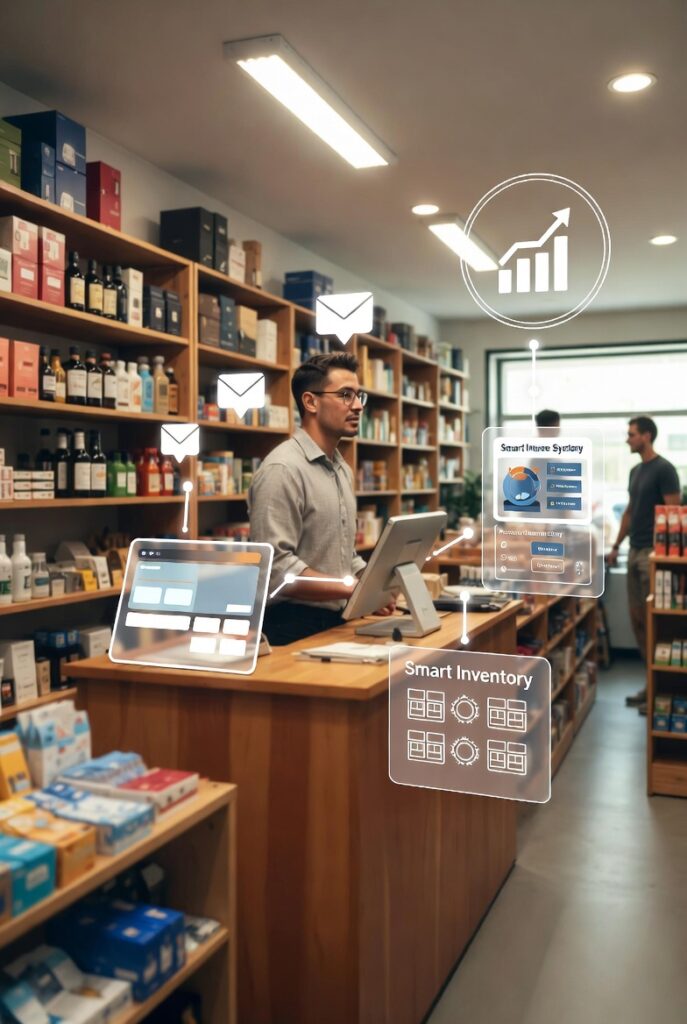
Not all follow-up tools are built the same. A generic autoresponder that sends the same email to every inquiry is not lead follow-up automation. It is a slightly better version of doing nothing. What you are looking for is a system that connects to where your leads actually come in, responds in a way that reflects the specific inquiry, and continues to follow up intelligently until the lead converts or opts out.
- Connects to your website forms, listing portals, Google Business profile, and phone line
- Responds within seconds, not hours, and does so around the clock
- Personalizes responses based on the inquiry, the property, the service requested, or the question asked
- Runs a multi-touch follow-up sequence across SMS, email, and voice if needed
- Qualifies leads during the sequence and passes conversation summaries to your team
- Integrates with your CRM or scheduling system so nothing has to be entered manually
The best time to implement lead follow-up automation was the day you started taking inquiries. The second best time is today.
Start Here. Build From Here.
There is a right order to building an automated business. You do not start with the complex workflows. You start with the thing that touches revenue first, that closes the most obvious gap, and that gives you proof that automation works before you go deeper.
Lead follow-up is that starting point for every service business. Once it is running, you will have the confidence, the data, and the revenue to build the next layer. But it starts here.
The leads are already coming in. The question is whether they are being met.
Start With the Automation That Pays First
See how Bot4orge builds and deploys lead follow-up automation for service businesses, and what it could mean for your conversion rate this month.
Bot4orge — AI Automation for Service Businesses